
BEV, PHEV, HEV, MHEV: Every Type of Electric Car in Ireland Explained

This guide explains every electrified powertrain available in Ireland, the exact grants that apply to each one, and how to figure out which type actually fits your life.
ℹ️ DoneDeal Cars insight: More than half of all new cars registered in Ireland in 2025 had some form of electric powertrain. For the first time in Irish motoring history, combined HEV, PHEV, and BEV new car sales outnumbered conventional petrol and diesel registrations. The shift is already here.
What are the different types of electric car?
There are four electrified powertrain types currently on sale in Ireland: the mild hybrid (MHEV), the self-charging hybrid (HEV), the plug-in hybrid (PHEV), and the battery electric vehicle (BEV). Each one works differently, costs differently to run, and qualifies for different government supports.
The simplest way to think about them is on a spectrum. At one end, the mild hybrid barely uses electricity at all — it is really just a conventional petrol car with a small energy-recovery system bolted on. At the other end, the full BEV runs entirely on electricity with no engine backup whatsoever. The HEV and PHEV sit in between, with meaningfully different approaches to how they balance petrol and electric power.
What is a Mild Hybrid (MHEV)?
A mild hybrid is the most basic form of electrification and the one that is most easily misunderstood. The name implies more electric capability than actually exists.
An MHEV uses a small 48-volt battery and a belt-integrated starter-generator to recover energy during deceleration and braking. That recovered energy is then used to assist the petrol engine during acceleration — reducing the load on the engine and marginally improving fuel efficiency. The electric motor cannot drive the car on its own, even for a single metre.
You never plug a mild hybrid in. The battery charges itself automatically. The fuel savings compared to a standard petrol equivalent are real but modest — typically a 10 to 15 percent improvement in official fuel economy figures. In real Irish driving, the difference is often smaller than that.
Mild hybrids are widely available across the market because they are cheap to produce and help manufacturers meet EU emissions targets. The Suzuki Swift, Ford Puma, Renault Clio, and many Kia and Hyundai models come with MHEV variants. They are a reasonable choice if you want slightly better fuel economy than a straight petrol car and no charging infrastructure at all. They are not a meaningful step toward electric driving.
⚠️ Watch out: Mild hybrids are sometimes marketed with vague "eco" language that implies more electrification than they offer. An MHEV cannot run on battery power alone and qualifies for no SEAI EV grants. If you are buying for environmental reasons or to access grant support, an MHEV is not the right choice.
What is a Self-Charging Hybrid (HEV)?
The self-charging hybrid — or HEV — is the type that made hybrid motoring mainstream. Toyota built this category with the original Prius and has dominated it ever since. The Toyota Yaris Cross is currently the top-selling HEV model in Ireland, and Toyota is the overall top-selling HEV brand.
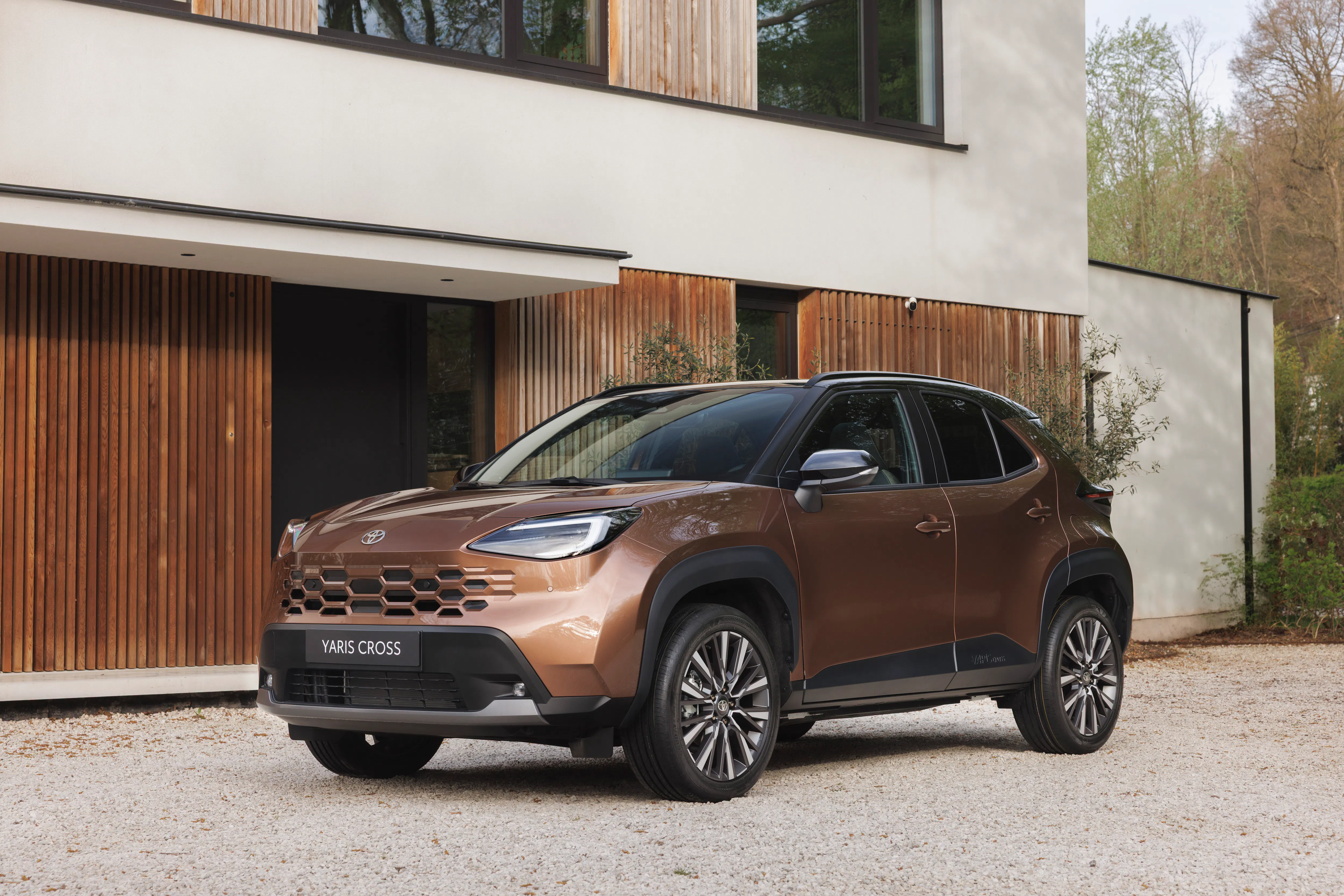
An HEV has two full power sources: a petrol engine and an electric motor with a larger battery than an MHEV. The car's onboard computer constantly manages which source powers the wheels, switching seamlessly between the two depending on speed, load, and battery state. At low speeds and during urban stop-start driving, the HEV frequently runs on the electric motor alone for short distances. On the motorway, the petrol engine takes over and the electric system assists.
The battery recharges in two ways: through regenerative braking, which recovers energy every time you slow down, and through excess energy from the petrol engine when it is running. You never need to plug an HEV in.
The real-world fuel efficiency advantage of a well-driven HEV is significant, especially in city and suburban driving where the electric motor does the most work. Many Irish HEV drivers report fuel consumption well below what an equivalent petrol car would achieve on the same routes.
The catch is that on longer motorway journeys, the HEV advantage largely disappears. At sustained high speeds, the petrol engine is doing almost all the work and fuel consumption approaches that of a conventional car. For drivers with primarily motorway commutes, the HEV benefit is limited.
Popular HEV models in Ireland include the Toyota Corolla, Toyota Yaris, Toyota Yaris Cross, Toyota RAV4, and the Hyundai Tucson Hybrid.
ℹ️ DoneDeal Cars insight: The "self-charging" marketing phrase is technically accurate — but it is also slightly misleading. It implies the car charges itself as if by magic. What actually charges the battery is the petrol engine and regenerative braking. The energy still comes from petrol, just more efficiently.
What is a Plug-In Hybrid (PHEV)?
The plug-in hybrid is the closest thing to a full electric car without actually being one. It has both a petrol or diesel engine and a large rechargeable battery that can be charged from an external power source — either a home charger or a public charger.
The crucial difference from an HEV is the battery size. A typical PHEV battery can power the car on electricity alone for 50 to 80km in real-world driving — enough to cover the average daily commute for most Irish drivers on electric power only. The petrol engine is there as a backup for longer journeys and kicks in automatically when the battery runs low.
This is where the PHEV genuinely earns its place. The average daily commute in Ireland is well under 60km. A driver who charges their PHEV at home overnight and plugs in at work could complete virtually all their weekday driving on electricity, with zero fuel cost. Then, on a weekend trip to Kerry or Galway, the petrol engine handles the distance without any anxiety.
The PHEV only works as intended if you actually charge it regularly. A PHEV driven without charging — as many company car drivers are guilty of — is hauling a heavy battery around on petrol power alone. That makes it less efficient than a straight petrol car or a conventional HEV. The PHEV's promise is entirely dependent on plugging it in.
⚠️ Watch out: The SEAI grant of €2,500 previously available for PHEVs has been removed. PHEVs no longer qualify for the SEAI purchase grant or VRT relief. If grant savings are important to your budget, only a full BEV qualifies. The €300 SEAI home charger grant still covers PHEVs — so if you do buy a PHEV, you can still get support for a home charger installation.
Popular PHEV models in Ireland include the Hyundai Tucson PHEV, BMW 3 Series PHEV, Volvo XC40 Recharge, and Kia Sorento PHEV.
What is a Battery Electric Vehicle (BEV)?
A battery electric vehicle has no combustion engine whatsoever. It runs entirely on electricity stored in a large battery pack, typically mounted in the floor of the car. There is no fuel tank, no exhaust, no oil to change, and no clutch.
You charge a BEV by plugging it in — either at a home charger overnight, at a workplace charger during the day, or at a public rapid charger when needed. The time required to charge from low to full depends on the battery size and charger speed. A typical home 7.4kW charger will replenish most BEVs overnight. A rapid public charger (50kW or above) can add significant range in 20 to 40 minutes.
Real-world range has improved significantly in recent years. Most mainstream BEVs available in Ireland in 2026 offer between 300km and 500km of realistic range in mixed driving. Premium and larger models can exceed 500km. Cold weather reduces range, typically by 15 to 25 percent in winter, which is a genuine consideration on Irish winter roads.
The majority of EV owners charge at night using EV night rate tariffs at home, where home charging can cost less than a third of the equivalent petrol fuel cost. For a driver covering 18,000km per year, the saving on fuel costs alone can be around €1,750 annually compared to a petrol equivalent.
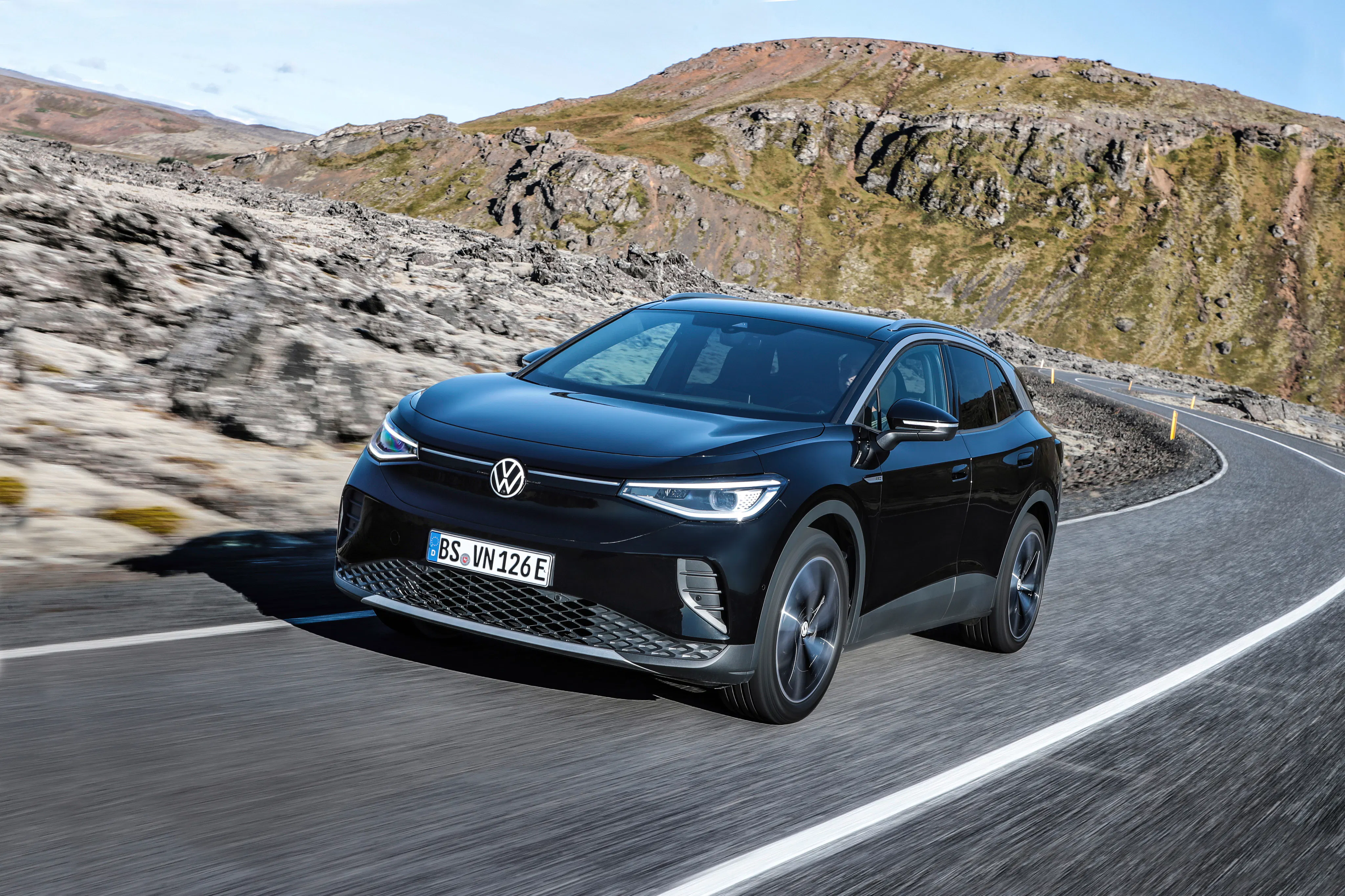
The top-selling BEV models in Ireland in 2025 were the Volkswagen ID.4, Tesla Model 3, and Kia EV6. More affordable options include the Hyundai Inster (from under €20,000) and the BYD Dolphin Surf.
What grants are available for electric cars in Ireland?
The grants available in Ireland depend entirely on which type of electrified car you are buying, and only BEVs qualify for the main purchase grants.
The SEAI Private Car Grant (BEV only)
The SEAI offers a grant of up to €3,500 for new battery electric vehicles priced between €14,000 and €60,000. From 31 July 2026, the upper price limit reduces from €60,000 to €50,000. Your car dealer applies for the grant on your behalf and deducts it from the price — you never apply directly. PHEVs, HEVs, and MHEVs do not qualify. Citizens Information
VRT Relief (BEV only)
VRT relief of up to €5,000 applies to BEVs with an Open Market Selling Price (OMSP) up to €40,000, with tapering relief for vehicles priced between €40,000 and €50,000. This relief is confirmed active until 31 December 2026. It is built into the showroom price automatically — you do not see it as a separate line item. Deenergyhub
The ICE2EV Scrappage Scheme (BEV only, from July 2026)
From 1 July 2026, the new ICE2EV scrappage scheme will offer €5,000 to people who trade in a petrol or diesel car that is more than 13 years old and buy a new electric vehicle. Combined with the existing €3,500 SEAI grant, that is up to €8,500 towards a new BEV. The scheme is a €10 million pilot on a first-come, first-served basis, with the majority of funding ring-fenced for drivers outside the main cities.
⚠️ Watch out: The ICE2EV scheme is newly announced. At the time of writing, the full terms and conditions — including whether the scrapped car must have a valid NCT or current tax, and the exact application process — have not yet been officially published. The €8,500 figure is the maximum combined support. Check seai.ie for the up-to-date scheme rules before committing.
The SEAI Home Charger Grant (BEV and PHEV)
The SEAI home charger grant is worth €300 towards the purchase and installation of a qualifying smart home EV charger. You must be a homeowner with off-street parking linked to your property's MPRN. The grant is available for BEV and PHEV owners. A typical 7.4kW home charger costs €1,100 to €1,800 installed in 2026, so the €300 grant is a useful contribution. You must use an SEAI-registered installer — your installer typically handles the application on your behalf.
Stacking grants: the best-case scenario
A private buyer in 2026 purchasing a qualifying new BEV priced under €40,000 OMSP can potentially stack: the €3,500 SEAI purchase grant, up to €5,000 VRT relief, and the €300 home charger grant — a combined saving of up to €8,800 before factoring in the €120 annual motor tax. If scrapping an eligible older car under ICE2EV, the maximum combined figure rises to €8,500 on the car purchase alone (the €3,500 SEAI grant is included within the ICE2EV total, not additional to it).
ℹ️ DoneDeal Cars insight: If you are buying a used BEV on DoneDeal Cars rather than a new one, the main SEAI purchase grant and VRT relief do not apply. The €300 home charger grant is still available to homeowners buying a used BEV or PHEV.
What is the motor tax for electric and hybrid cars in Ireland?
Motor tax is one of the clearest financial advantages of going fully electric. A BEV pays €120 per year regardless of battery size or power output which is the lowest possible rate in Ireland. PHEVs emitting under 50g/km of CO2 pay €140 per year. HEVs and MHEVs are taxed on their CO2 emissions in the standard way, which typically puts them in a lower band than pure petrol or diesel equivalents, but not at the €120 flat rate reserved for zero-emission vehicles.
Which type of electric car is right for me?
The honest answer depends on three things: where you live, how you drive, and whether you can charge at home.
If you can charge at home and your daily driving is mostly under 200km, a BEV is almost certainly the right choice financially. The savings on fuel, motor tax, and servicing costs are substantial, and the charging logistics become simple overnight. The grants make a BEV more accessible than it has ever been.
If you cover long distances regularly, do a lot of motorway driving, or frequently travel to areas where public charging is limited, a PHEV gives you the efficiency of electric driving for everyday journeys with the freedom of a petrol engine for longer trips. The key is committing to charging it. If you are not going to plug it in regularly, an HEV is a better option.
If you do not have off-street parking and cannot charge at home, the BEV equation changes significantly. Public charging in Ireland costs €0.50 to €0.70 per kWh and above, which is still cheaper than petrol per kilometre but much less compelling than home night-rate charging. For urban drivers without home charging, a PHEV or a well-chosen HEV may make more practical and financial sense.
If you are not ready to think about charging at all, a self-charging HEV gives you genuinely improved fuel economy — particularly in town — with no new habits required. It will not qualify for purchase grants, but it is a meaningful step up from a conventional petrol car.
A mild hybrid, by contrast, is a reasonable car but not a meaningful electrification choice. Buy it because you like the specific model, not because of the green credentials.
ℹ️ DoneDeal Cars insight: Searching for an EV on DoneDeal Cars? You can filter by fuel type — Battery Electric, Plug-In Hybrid, or Hybrid — to narrow your search to exactly the type of car that suits you.
What does BEV, PHEV, HEV, and MHEV mean in practice?
Here is a plain-English summary of what each type means for your daily life.
MHEV (Mild Hybrid) — in plain English
You drive it exactly like a petrol car. Fill it with petrol. No plugs, no charging, no new habits. The mild hybrid system works invisibly in the background. Fuel economy improves slightly. No grants. No special motor tax rate.
HEV (Self-Charging Hybrid) — in plain English
You drive it like a petrol car. Fill it with petrol. No plugs required. The car switches between petrol and electric automatically. Noticeably better fuel economy in town and suburban driving, less so on the motorway. No purchase grants. Standard emissions-based motor tax.
PHEV (Plug-In Hybrid) — in plain English
You fill it with petrol and you plug it in. Charge it overnight and you can cover most daily commutes on electricity alone. Forget to charge it and you are driving a slightly heavy petrol car. No SEAI purchase grant. €300 home charger grant available. Motor tax at emissions-based rate (low for models under 50g/km CO2).
BEV (Battery Electric Vehicle) — in plain English
You never fill it with petrol. You charge it at home overnight or at public chargers. Zero tailpipe emissions. Significantly lower fuel and servicing costs. Up to €8,500 in combined purchase grants and incentives for qualifying new models in 2026. Motor tax €120 per year flat.
Frequently Asked Questions
What is the difference between an HEV and a PHEV?
An HEV (self-charging hybrid) uses a small battery that charges automatically while you drive — you never plug it in. The electric motor assists the petrol engine but cannot drive the car independently for meaningful distances. A PHEV (plug-in hybrid) has a larger battery that you charge from an external power source. It can drive on electricity alone for 50 to 80km in real-world conditions, covering most daily commutes without using any petrol. The PHEV's advantage only materialises if you actually charge it regularly.
Do hybrids qualify for SEAI grants in Ireland?
No. The SEAI purchase grant of up to €3,500 and VRT relief of up to €5,000 apply only to new battery electric vehicles (BEVs). The SEAI grant for PHEVs was removed. HEVs and MHEVs have never qualified. The one exception is the €300 SEAI home charger grant, which does cover both BEVs and PHEVs.
Is a self-charging hybrid worth buying in Ireland?
A self-charging hybrid is worth buying if you want better fuel economy than a conventional petrol car without any charging infrastructure. It works best for urban and suburban driving with frequent stop-start traffic, where the electric motor does the most work. For mainly motorway driving, the benefit is limited. An HEV is not the right choice if your main motivation is grants, zero emissions, or significant running cost savings — for those priorities, a BEV is the better option.
Can I charge a mild hybrid at home?
No. A mild hybrid (MHEV) cannot be plugged in at all. The small 48-volt battery charges automatically through regenerative braking and excess engine energy. There is no charging socket on an MHEV.
What SEAI grants are available for buying a new electric car in Ireland in 2026?
Private buyers of qualifying new BEVs priced between €14,000 and €60,000 can access a €3,500 SEAI purchase grant (applied automatically by the dealer) and up to €5,000 in VRT relief for cars priced under €40,000 OMSP, tapering to €50,000. From July 2026, drivers scrapping a petrol or diesel car older than 13 years can access the ICE2EV scrappage scheme, giving up to €8,500 in combined grant support for a new BEV. A separate €300 grant is available for home charger installation for BEV and PHEV owners. PHEVs, HEVs, and MHEVs do not qualify for purchase grants.
Will BEV grants still be available in 2027?
VRT relief for BEVs is confirmed until 31 December 2026 but has not been extended beyond that date. The SEAI purchase grant is funded through an annual budget and is subject to availability. BIK reliefs for company car EVs are also tapering from 2027. For buyers considering a purchase in late 2026 versus early 2027, the current incentive window is meaningfully more generous. Check seai.ie for the most up-to-date information before making a purchase decision.
How far can a BEV travel on a single charge in Ireland?
Most mainstream BEVs available in Ireland in 2026 offer between 300km and 500km of realistic range in mixed driving. Entry-level models like the Hyundai Inster manage around 250 to 300km. Long-range models like the Tesla Model 3 Long Range and Kia EV6 Long Range can exceed 500km. Cold Irish winter weather typically reduces range by 15 to 25 percent. The vast majority of Irish daily commutes are well under 100km, so range anxiety is less of a practical concern for everyday use than it is often portrayed.
What is the motor tax for an electric car in Ireland?
The annual motor tax for a battery electric vehicle (BEV) is €120 per year — the lowest motor tax rate available in Ireland. This flat rate applies regardless of battery size or power output. PHEVs emitting under 50g/km CO2 are taxed at €140 per year. HEVs and MHEVs are taxed according to their CO2 emissions, typically placing them in a lower tax band than petrol equivalents but not at the €120 flat BEV rate.
What is the cheapest new electric car available in Ireland?
The most affordable new BEVs currently on sale in Ireland are the Hyundai Inster, which starts below €20,000 after the SEAI grant, and the Dacia Spring. Both are small city cars suited to urban driving and short commutes. The SEAI grant of €3,500 applies to both, and VRT relief applies to models within the OMSP threshold. Check donedeal.ie for the current selection of new and used BEVs at every price point.
Is it worth buying a used electric car on DoneDeal Cars?
A used BEV on DoneDeal Cars does not qualify for the SEAI purchase grant or VRT relief, but can still represent strong value. The main considerations are battery health — how much of the original range has been retained — and charging compatibility. Older models like the Nissan Leaf use CHAdeMO rapid charging, which is becoming less common. Newer used models typically use CCS, the current standard. Always check the battery health report if available, and factor in home charging access before committing.