
Kia PV5

DoneDeal Cars Verdict: 4.2/5
Pros
- Boot space and passenger room that shames SUVs costing twice the price
- Real-world running costs are among the lowest in the family car segment
- Sliding doors and a flat floor make family life genuinely easier every day
Cons
- Interior materials feel van-derived — because they are
- Motorway wind noise is noticeable and won't suit buyers used to premium cabins
- Seven-seat version not yet available in Ireland — the one configuration that makes the full case for family buyers
What is the design like?
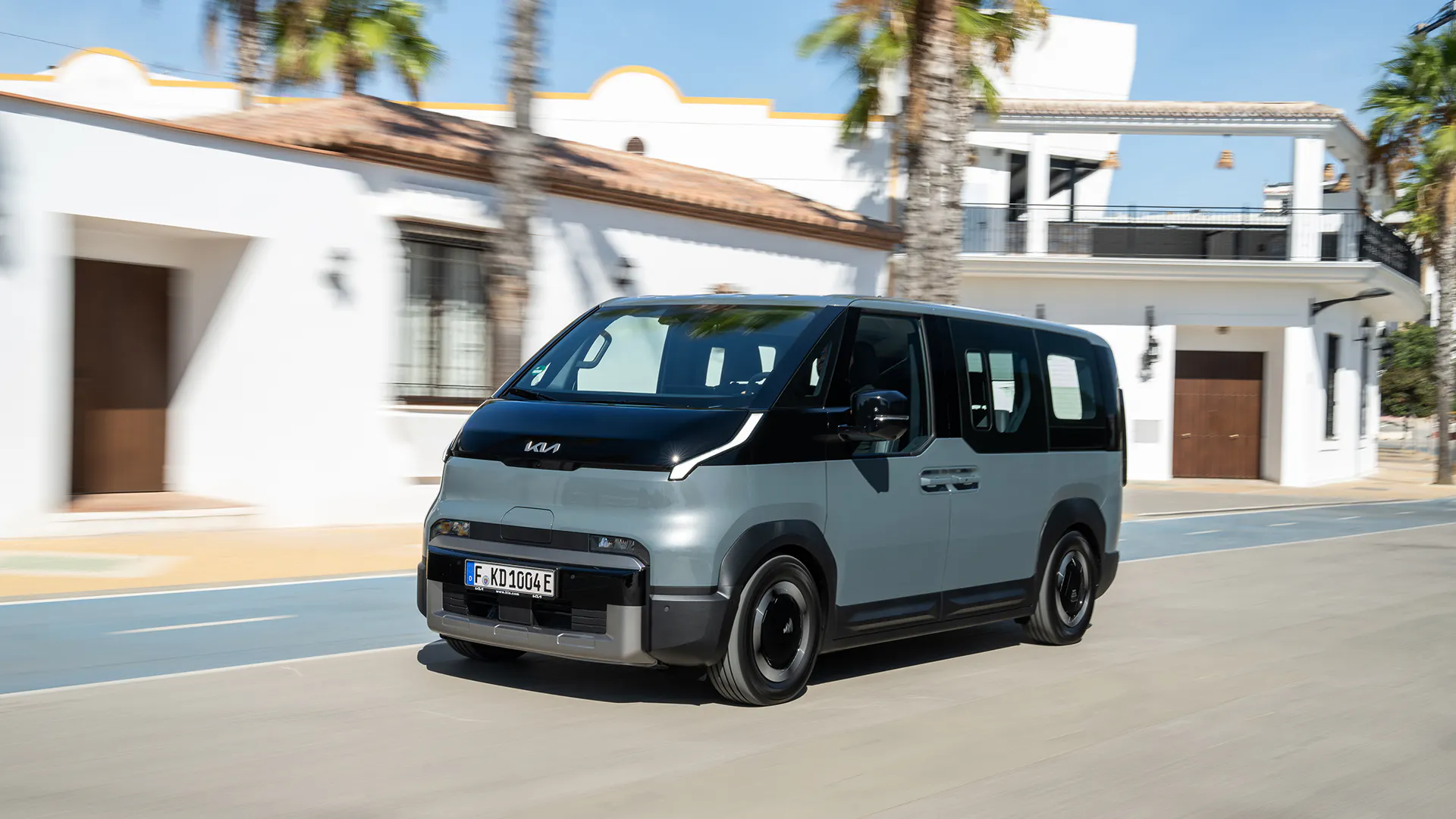
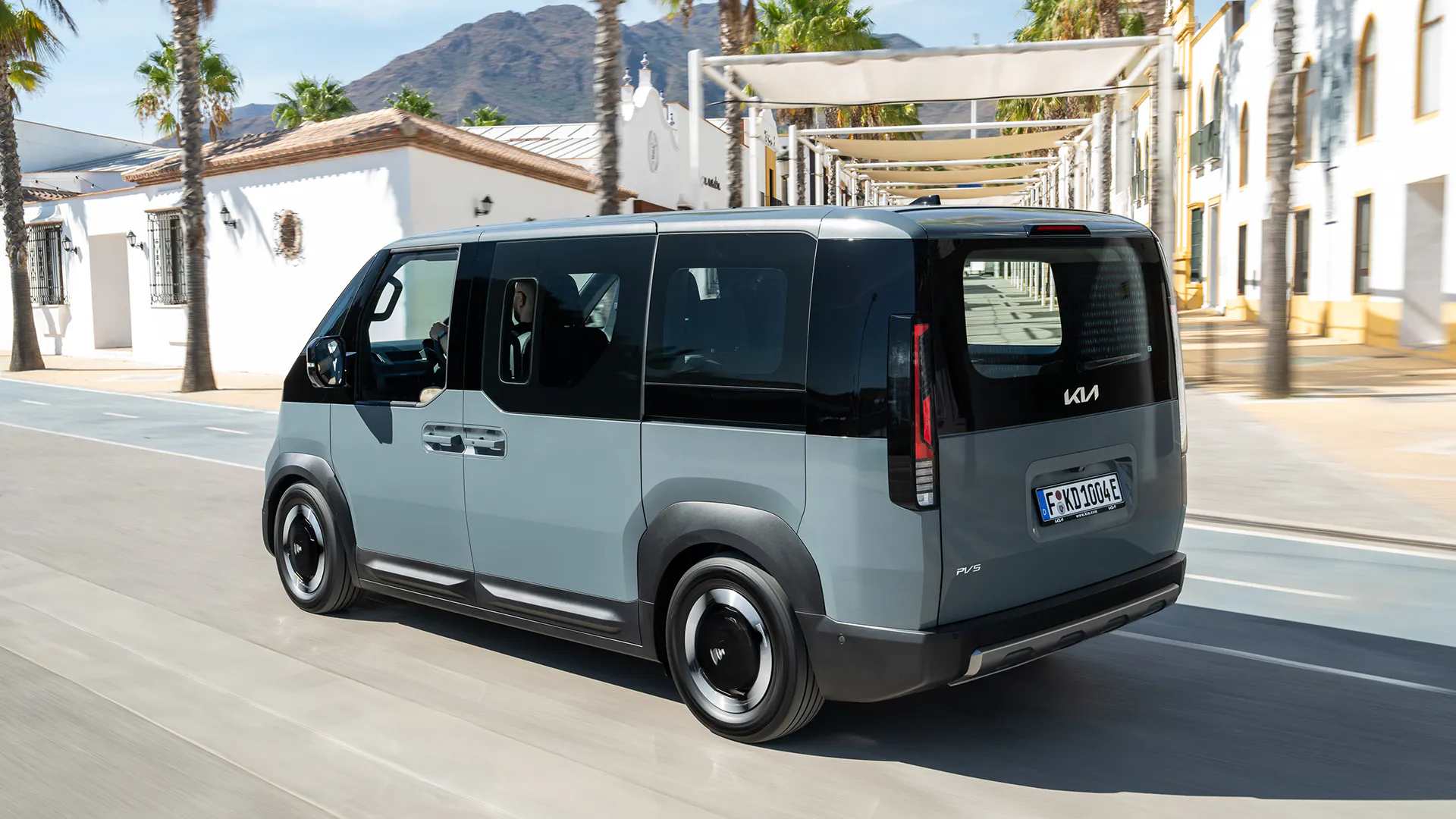
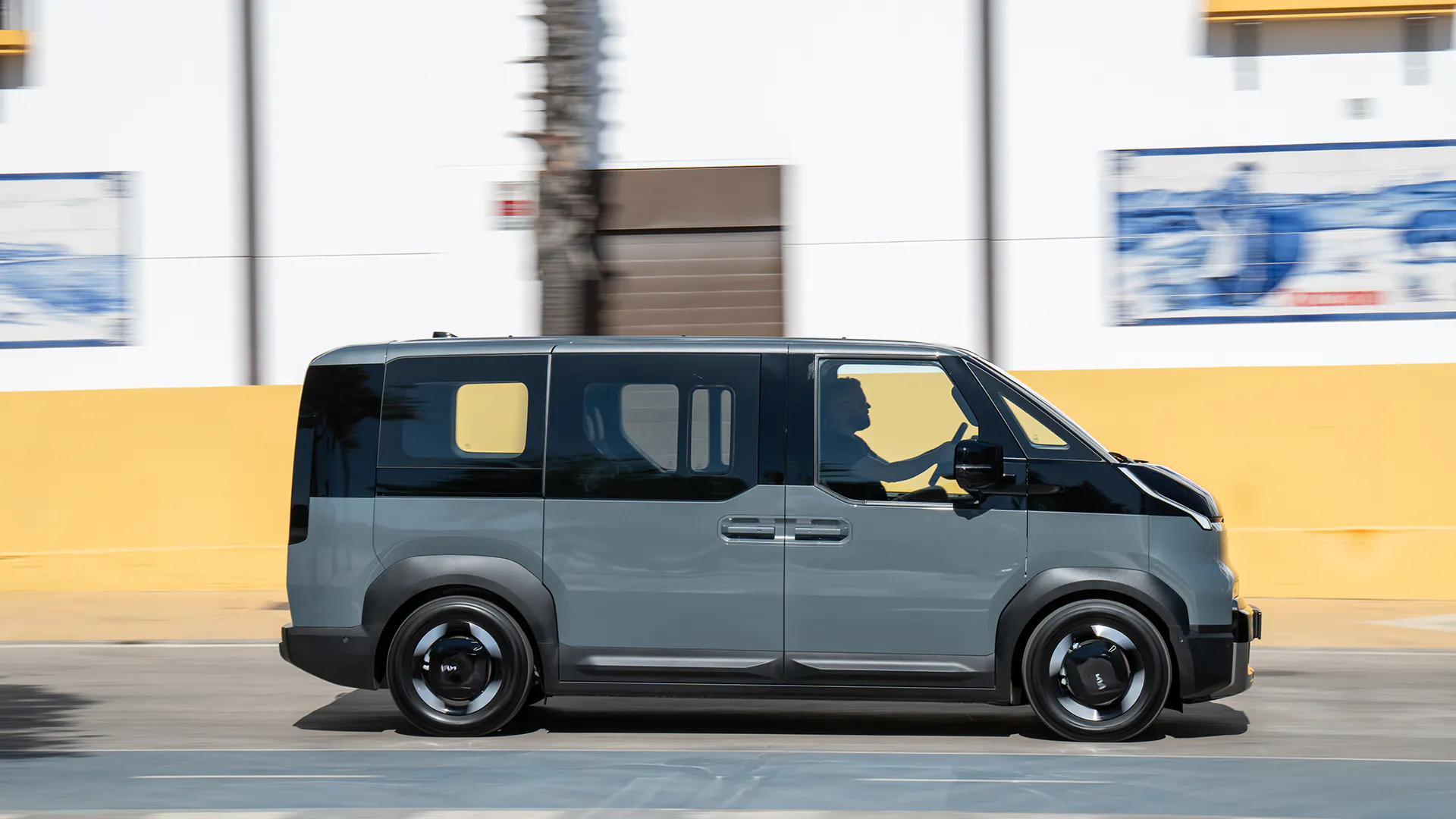
The Kia PV5 Passenger looks like nothing else on Irish roads right now, and that is a deliberate choice. Its tall, upright body is engineered to maximise interior volume, with every dimension — 4,695 mm long, 1,895 mm wide, 1,899 mm high — optimised for passenger and cargo space rather than visual sleekness. The front end features Kia’s ‘Futuristic Tiger Face’ treatment: a clean, smooth fascia with a centrally positioned charging port (so charging cables never block the sliding rear doors), vertically stacked LED daytime running lights, and lower-mounted LED headlights. From the side, the boxy silhouette is given attitude by SUV-style wheel arch cladding and wraparound window trim. One genuinely clever detail: the body panels and bumper corners are modular, designed to be replaced section by section after supermarket car park scrapes rather than as a complete bumper unit — a practical, cost-conscious feature that Irish family buyers will appreciate over time. Nine exterior colours are available, all with a two-tone finish featuring a gloss black bonnet and black window surrounds as standard.
What is the Kia PV5 interior like?
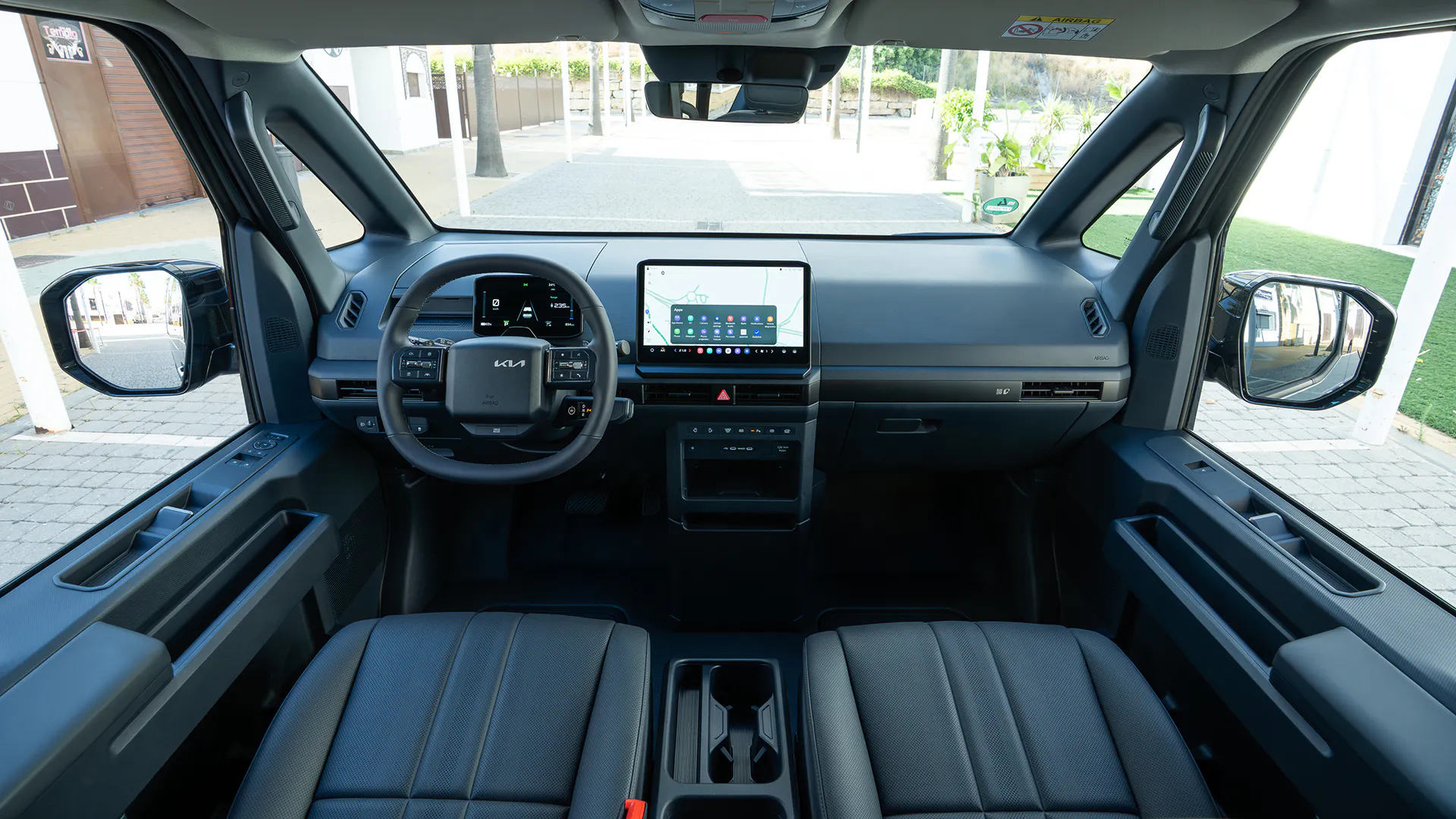
This is where the PV5 Passenger makes its strongest case as an Irish family car. The cabin is vast. With all five seats in use there is 1,320 litres of boot space behind the rear bench — more than most large SUVs — and rear passengers enjoy generous headroom and legroom thanks to the long 2,995 mm wheelbase and flat E-GMP.S floor. Twin 775 mm-wide sliding rear doors with a low 399 mm step-in height make loading children and car seats straightforward, particularly in tight car park spaces where conventional rear-hinged doors become a problem. ISOFIX points are fitted to both outer rear seats. Storage throughout the cabin is well considered, with a pop-top dashboard compartment, large glovebox, deep door pockets, and rear seat pockets all present.
K4 specification adds ventilated and heated powered front seats, heated rear seats, artificial leather and fabric upholstery, a 360-degree surround view monitor, blind-spot view monitors with live camera feeds in the instrument cluster, and electrically folding mirrors. The 12.9-inch central touchscreen with wireless Apple CarPlay and Android Auto is standard across the range. The honest caveat: interior material quality reflects the PV5’s van origins. Hard plastics are prominent, the cabin has a functional rather than premium feel, and it falls noticeably short of the Volkswagen ID.Buzz for perceived quality. For buyers whose priority is space per euro rather than soft-touch surfaces, this is a fair trade. For those who expect a premium feel at this price point, it may disappoint.
How does it drive?
The PV5 Passenger drives considerably better than its van-derived proportions suggest, and that is not faint praise — it is one of the most important things an Irish family buyer needs to know. Steering is light and responsive at low speeds with an 11.0-metre turning circle that makes urban manoeuvring and school run parking easier than in many large SUVs. As speed increases, steering weight builds progressively and predictably. The ride is comfortable and settled on typical Irish road surfaces, and the low-set battery platform keeps body roll well controlled for a tall vehicle.
The caveats are real and worth stating. Wind noise on the motorway is noticeable: the upright frontal area generates more aerodynamic turbulence than a conventional SUV, and road and suspension noise can reverberate through the large cabin on coarser surfaces — more so than in the Volkswagen ID.Buzz. The PV5 will not trouble driving enthusiasts, but for the school-run-to-motorway family use case it is composed, easy and fatigue-free. Four levels of brake regeneration are available, including a one-pedal driving mode for urban use.
What are the Kia PV5 Passenger running costs in Ireland? (Running Costs & Efficiency)
For Irish family buyers, the PV5 Passenger’s running cost case is straightforward. Annual motor tax is €120, the lowest band available. The SEAI purchase grant of €3,500 (subject to current scheme eligibility) reduces the effective purchase price to €39,050 for the K2 and €41,850 for the K4. No VRT surcharge applies to zero-emission vehicles priced below €50,000. WLTP-certified range is 412 km on a full charge; real-world mixed driving is likely to return 300–350 km depending on speed and conditions, with motorway-heavy routes at the lower end. The 150 kW DC rapid charge capability means a 30-minute stop at a public fast charger restores the majority of range — relevant for Irish long-distance journeys. Service intervals are two years or 20,000 km. The seven-year vehicle warranty and eight-year battery warranty represent a significant ownership safety net for a new model entering the market.
Electric Range and Battery Performance
Kia quotes a WLTP range of 412 km for the PV5 Passenger's 71.2 kWh battery, but as any experienced EV driver knows, real-world figures tell a different story. In mixed Irish driving conditions — a blend of urban commuting, country roads and motorway stretches — you can realistically expect somewhere between 270 and 355 km on a full charge. Push it onto a cold motorway in January and that could drop closer to 225 km; stick to town driving on a mild day and 400 km-plus is genuinely achievable. For the vast majority of Irish family journeys, that real-world range is more than sufficient. Where the PV5 earns extra credit is on rapid charging: at a 150 kW DC public charger, Kia claims a 10–80 per cent top-up in 30 minutes, which means a decent coffee stop on a Cork-to-Dublin run gets you back on the road without a long wait. For day-to-day family use, range is unlikely to be a concern. For regular long-distance motorway driving, it is worth planning stops in advance.
Rivals worth cross-shopping in Ireland
The most obvious alternative is the Volkswagen ID.Buzz which starts at just under €68,000 so it much more expensive than the PV5.
Irish Prices
Irish range and pricing (PV5 Passenger, 2026):
• K2 Passenger — €42,550 (€39,050 after SEAI grant*); €120 annual motor tax
• K4 Passenger (tested) — €45,350 (€41,850 after SEAI grant*); €120 annual motor tax
*SEAI grant subject to current scheme availability and eligibility.
Buy with confidence
Trusted Dealer vehicles
This program highlights dealerships you can rely on. Dealers earn this certification by adhering to strict criteria.
Find Trusted Dealer carsGreenlight
Find Greenlight owner verified cars to purchase with confidence
Find Greenlight verified carsWarranty
Find Cars with warranties on DoneDeal, so that you can have peace of mind after purchase.
Find cars with warrantiesManufacturer approved
Find cars that have been quality checked and approved by their manufacturer.
Find approved cars