
Volkswagen T-Roc 1.5 TSI R-Line


DoneDeal Cars Verdict: 4.1/5
Pros
- Fabric-covered dashboard and 3-zone climatronic set a new class standard for interior quality
- 150 PS mild hybrid exclusive to R-Line - punchier than it looks on paper
- 475-litre boot - significantly more than most rivals including the C-HR PHEV
Cons
- Sports suspension is firm - the optional DCC chassis is worth adding for Irish roads
- No plug-in hybrid option at launch for buyers who want electric running
- IQ.DRIVE tech package (Travel Assist, Emergency Assist) costs extra
What is the design of the Volkswagen T-Roc like?
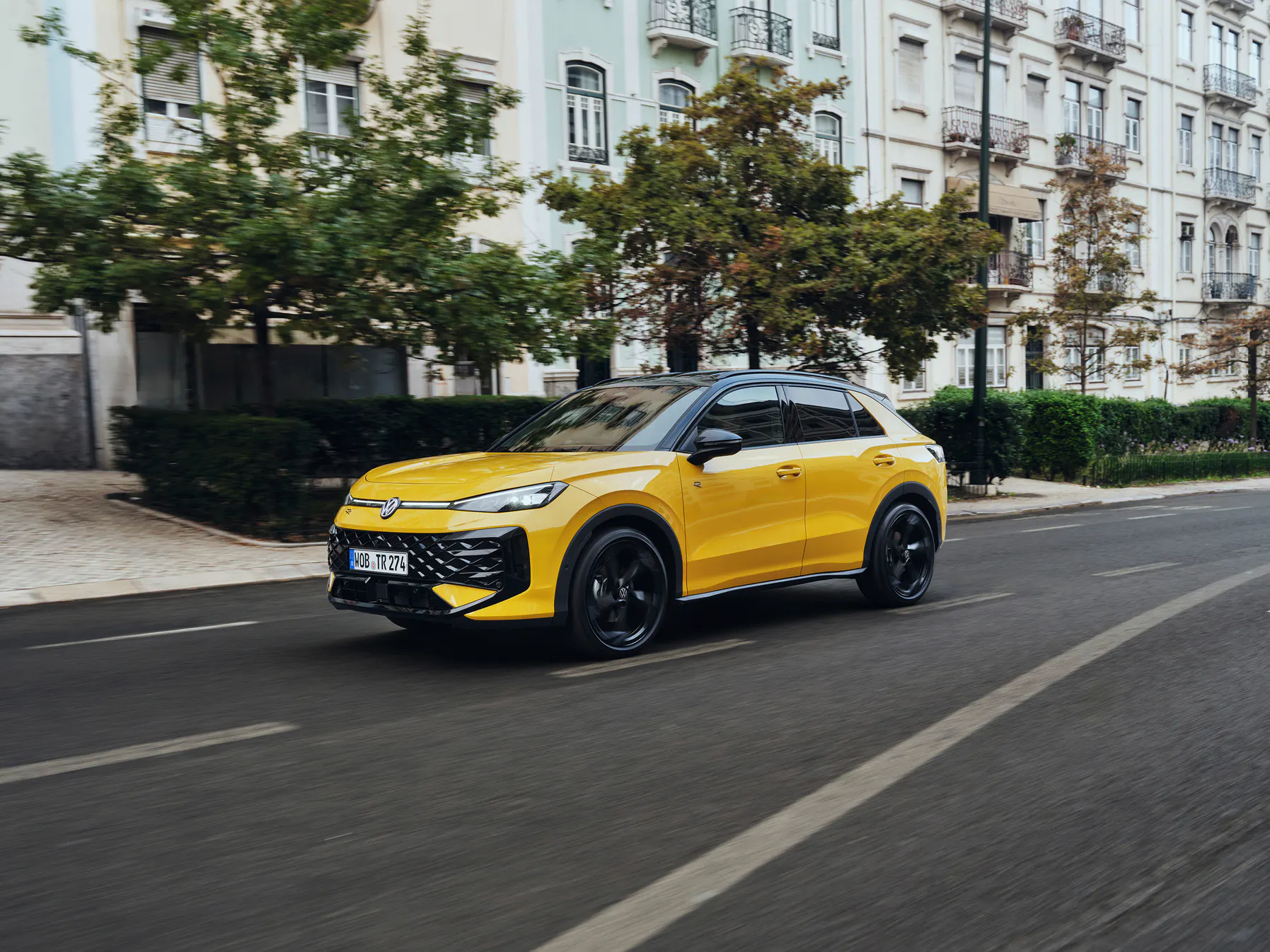
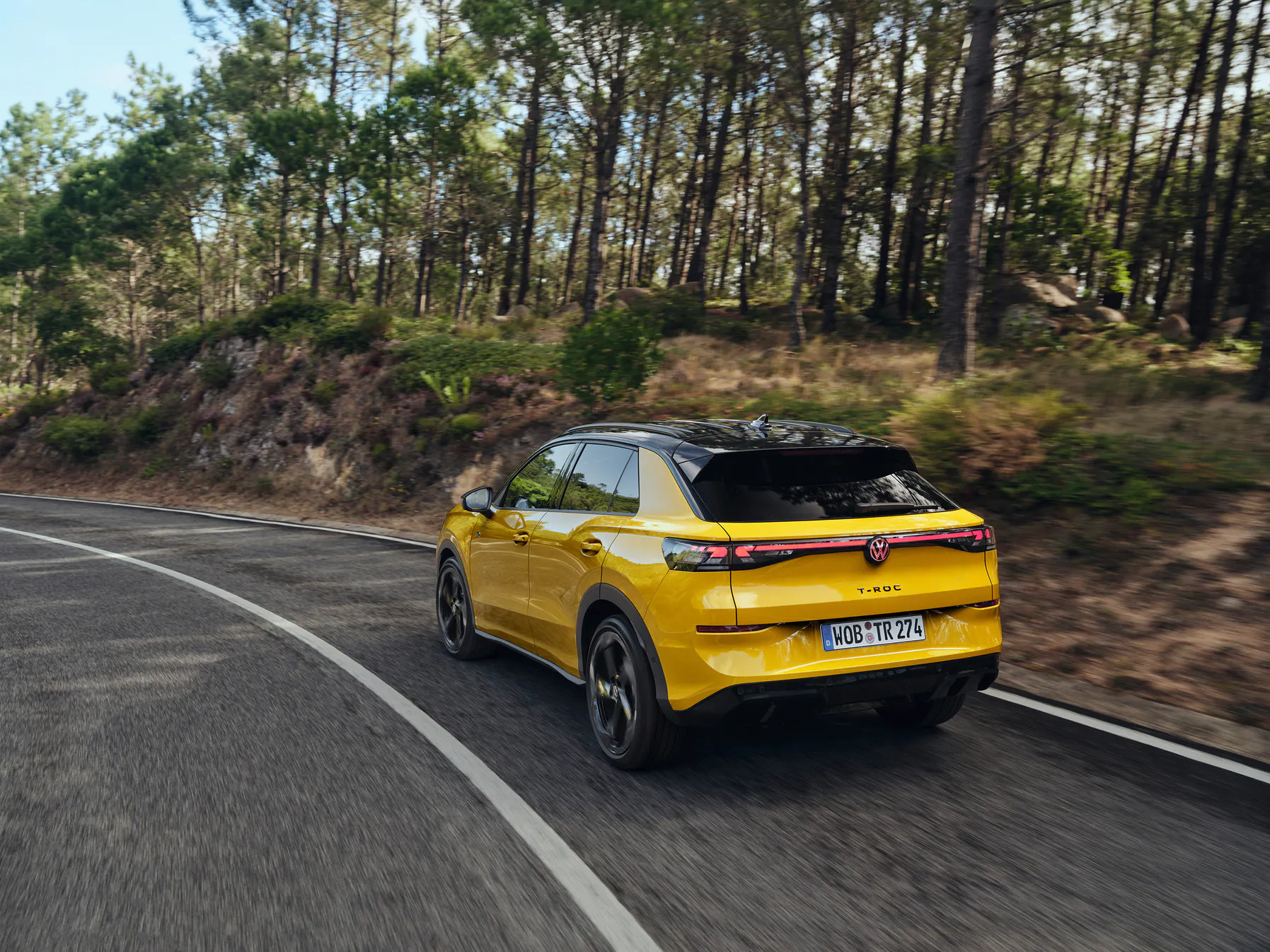
The all-new T-Roc looks like what it is: a car that has grown up. At 4,372 mm long - 122 mm more than the outgoing model - it no longer reads as a compact SUV straining to appear larger. The wheelbase is up by 39 mm too, and the proportions finally do justice to the car's ambitions. Volkswagen's designers have preserved the T-Roc's signature features such as the silver 'hockey stick' roof strip, the flared wheel arches — but updated the face to align with the broader VW family, referencing the Tayron and ID.7. The result is immediately recognisable as a T-Roc while looking like a generation ahead of it.
The R-Line adds its own front and rear bumpers, 18-inch Coventry diamond-turned alloy wheels, and LED Plus headlights with illuminated VW badges front and rear as standard - the light signature at night is genuinely distinctive. The optional Black Styling Package, available for the R-Line, swaps the silver exterior trim elements (roof rails, hockey-stick strip, badges) for gloss black and upgrades the alloys to 19-inch York Aero black wheels. On a Canary Yellow car it is a particularly strong look. Six exterior colours are offered; Canary Yellow is standard across all trims, with five metallic options available at extra cost.
The drag coefficient of 0.29 is a 10 per cent improvement on the old car and among the best figures in the class. The aerodynamic work such as air blades at the front, an elongated coupé roofline, a rear diffuser is visible in the design rather than hidden by it.
What is the Volkswagen T-Roc interior like?
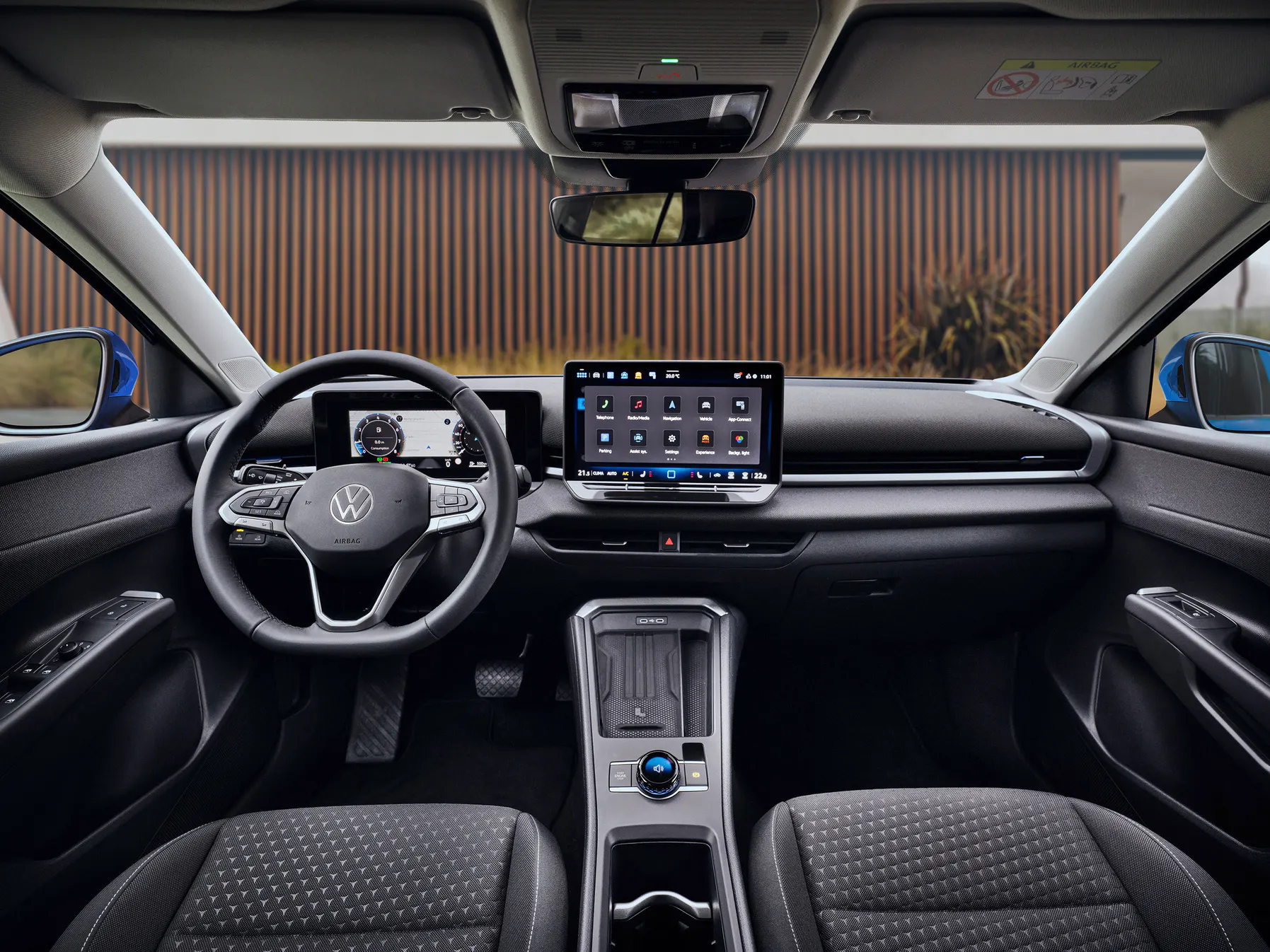
This is where the all-new T-Roc makes its biggest leap. The dashboard is covered in a softly padded fabric structure and not plastic and that reduces windscreen glare and signals a meaningful step up in quality from the outgoing car. It is the kind of detail you would expect in the Tiguan class, not a compact SUV. The R-Line comes in a Soul Black interior with a black headliner, stainless steel pedals, R-Line scuff plates, and sports comfort seats with integrated head restraints. The heated sports steering wheel is specific to this trim.
All three Irish T-Roc trims come with the 12.9-inch touchscreen with wireless Apple CarPlay and Android Auto as standard - strong value at any of the three price points. The digital instruments run to 10 inches with a new black panel mode that reduces the display to just speed and the essentials, which is genuinely useful on long drives. The R-Line adds 30-colour ambient lighting as standard, with the Atmospheres system allowing the driver to combine lighting moods with curated playlists via the illuminated rotary dial in the centre console. Three-zone climatronic air conditioning and Keyless Access with SAFELOCK are also standard on the R-Line.
The boot measures 475 litres to the top of the rear seatbacks - 30 litres more than the outgoing model — and expands to 1,350 litres with the seats folded. The rear seat area benefits from the extra 122 mm of length, with genuine legroom for taller adults behind their own driving position. The gear selector has moved to the steering column, freeing up the centre console and giving the cabin a cleaner, more modern feel.
How does the Volkswagen T-Roc drive?
The R-Line is the only T-Roc in Ireland with the 150 PS (110 kW) engine, the Life and Style trims use the 116 PS version. The 1.5-litre four-cylinder is a 48V mild hybrid, with a belt-driven starter-alternator that adds electric torque off the line and allows the engine to shut off during coasting. The result is a car that feels more eager than 150 PS would typically suggest: 0–100 km/h in 8.9 seconds, a top speed of 212 km/h, and 250 Nm available from 1,500 rpm. The seven-speed DSG is smooth in everyday driving.
Sports suspension, progressive steering, and shock absorption are all standard on the R-Line and exclusive to this trim. The firmer setup suits a well-surfaced road well, but on rougher Irish roads the optional Adaptive Chassis Control DCC - available only for the R-Line - is a worthwhile addition, letting the driver dial between Comfort and Sport damper settings. On the motorway the T-Roc is composed and refined; the aerodynamic improvements over the old car are audible at speed. In town, the 11.1-metre turning circle and progressive steering make it an easy car to place with accuracy.
Combined WLTP consumption is 5.6–5.8 l/100 km for the 150 PS engine, with CO₂ of 128–133 g/km. The mild hybrid's cylinder deactivation and coasting modes make a tangible contribution in mixed driving.
What are the Volkswagen T-Roc running costs in Ireland?
Annual motor tax is €200 for all three Irish T-Roc trims - the 17.5% VRT band applies across the range. WLTP combined consumption of 5.6–5.8 l/100 km is competitive for a 150 PS SUV. The braked towing capacity of the R-Line is 1,500 kg on a 12 per cent gradient. The seven-speed DSG requires no clutch replacement, and Volkswagen Ireland's service plan is included within the standard delivery charge.
The optional IQ.DRIVE Technology Package adds Travel Assist, Emergency Assist, 360-degree Area View cameras, and Proactive Passenger Protection. Travel Assist is the system that actively keeps the car centred in its lane, maintains speed, and can support assisted lane changes on the motorway from 68 km/h. Emergency Assist is the genuinely important one: if the driver becomes unresponsive, it automatically steers the car to the hard shoulder, activates the hazard lights, sounds the horn, and calls for emergency assistance. Both are available as optional extras and are among the best reasons to configure up from the base price. A separate Parking Package adds Park Assist with a memory function and remote parking via smartphone.
Rivals worth cross-shopping in Ireland
The most direct comparison in Ireland right now is the Toyota C-HR Sport Plug-In Hybrid at €43,205 on the road — €3,775 less than the T-Roc R-Line. The two cars make a genuinely interesting contrast. The C-HR Sport PHEV wins on price, power, acceleration, electric running, and road tax — particularly if you have a home charger and a short commute, the PHEV case is compelling. The T-Roc R-Line wins on boot space (165 litres more), interior quality, driving engagement, rear passenger room, and — in the right spec — driver technology. Choose the Toyota if running costs are the priority. Choose the Volkswagen if you want the better all-round family car experience.
Irish Prices
T-Roc Life
1.5 eTSI 116 PS DSG
CO₂ 126 g/km · Road tax €200/yr
€41,550 OTR
T-Roc Style
1.5 eTSI 116 PS DSG
CO₂ 127 g/km · Road tax €200/yr
€45,135 OTR
T-Roc R-Line Tested
1.5 eTSI 150 PS DSG
CO₂ 128 g/km · Road tax €200/yr
€46,980 OTR
Buy with confidence
Trusted Dealer vehicles
This program highlights dealerships you can rely on. Dealers earn this certification by adhering to strict criteria.
Find Trusted Dealer carsGreenlight
Find Greenlight owner verified cars to purchase with confidence
Find Greenlight verified carsWarranty
Find Cars with warranties on DoneDeal, so that you can have peace of mind after purchase.
Find cars with warrantiesManufacturer approved
Find cars that have been quality checked and approved by their manufacturer.
Find approved cars